 xbymc
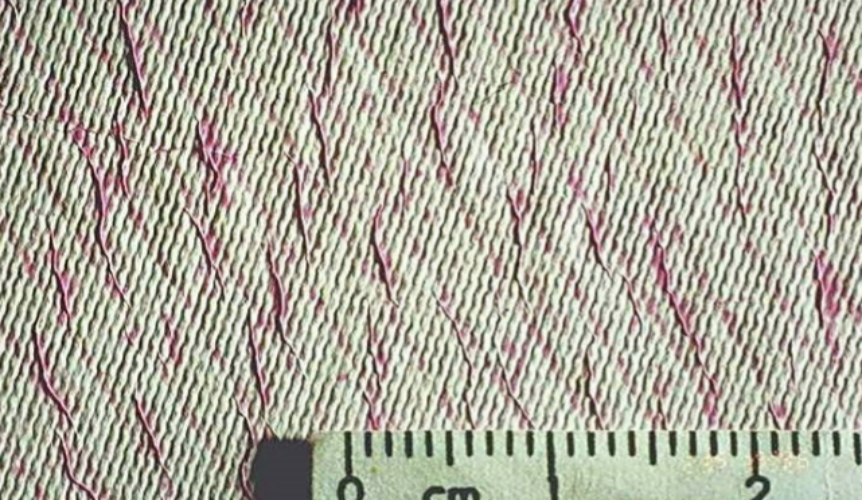
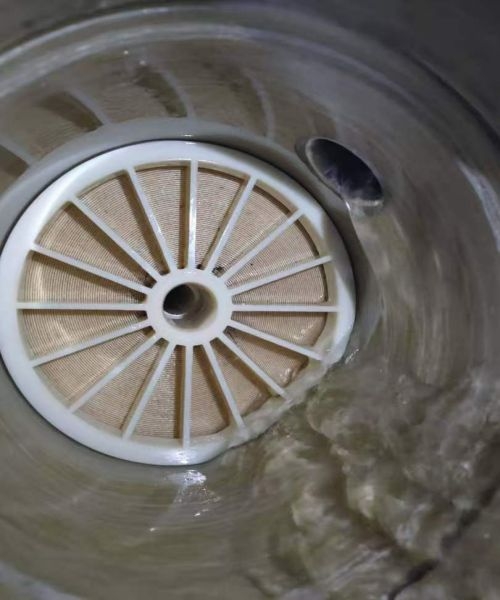
xbymcLet’s take a look at what’s wrong with these membranes.
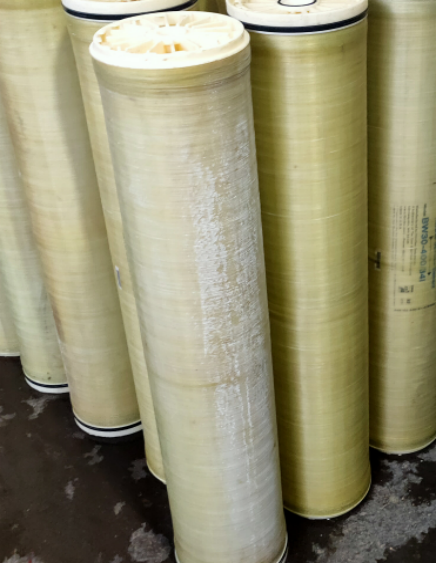
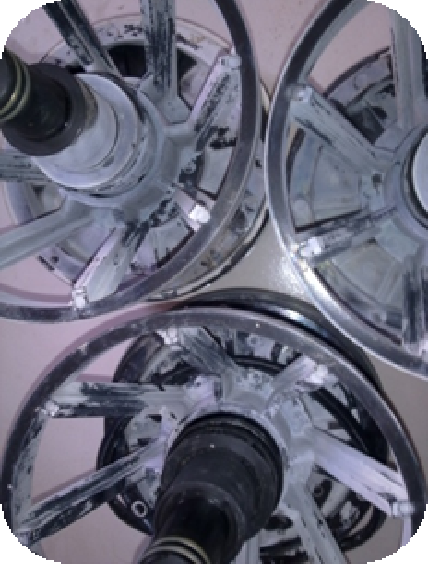
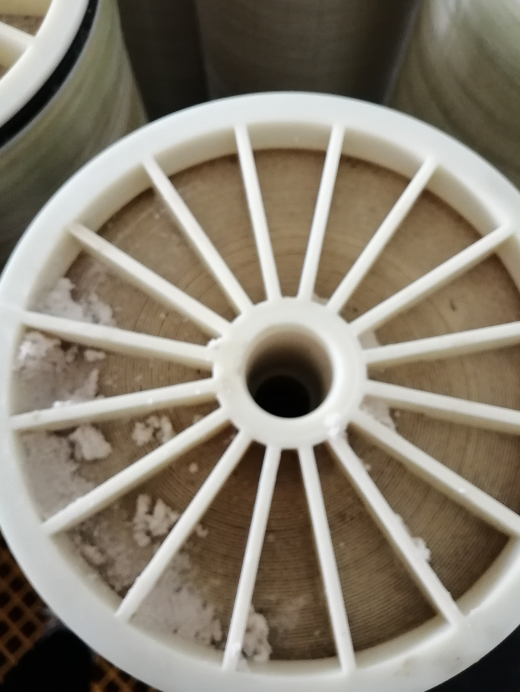
From the photos of reverse osmosis membranes, you can see a layer of white powder‑like substance on the membrane surface, and it feels grainy when touched. This is a typical membrane scaling problem. Even if the raw water is tap water which looks clean, a scaling layer will gradually form on the membrane after long‑time operation. To be honest, membrane scaling is almost impossible to avoid during the use of RO membranes.
Once scaling happens, what different changes can you notice from normal operation?
First of all, both the water production and salt rejection rate will go down;
Then the operating pressure and cross‑section pressure difference will become higher than usual.
For common scaling issues, you can carry out chemical cleaning with hydrochloric acid first, and then use alkali to finish the job. We once met a case where raw water quality on‑site had a big change and caused RO membrane scaling. Under such situation, you need to test the raw water in time and adjust the antiscalant formula base on water quality conditions.
Well, that’s all for today’s sharing. If you run into some tough problems while using reverse osmosis membranes, feel free to turn to XBYMC for help!