 xbymc
xbymcRegarding this question, I can give you a straight answer right away: Of course it can. Standard reverse osmosis membranes can remove over 99.99% of bacteria.
But if I just answer you like this, our website XBYMC will lose its value.
When people ask this question online, they don’t just want a simple yes or no. Once bacteria levels go over the standard limit, the consequences are usually far more serious than you think.
Seven or eight years ago, I took charge of a hospital project. Our job was to fully replace and commission their old water treatment system, which used a total of sixteen 8040 reverse osmosis membranes. Timing was extremely strict for hospital projects. The client only gave us one night to finish all work, because patients needed the system for kidney dialysis during daytime.
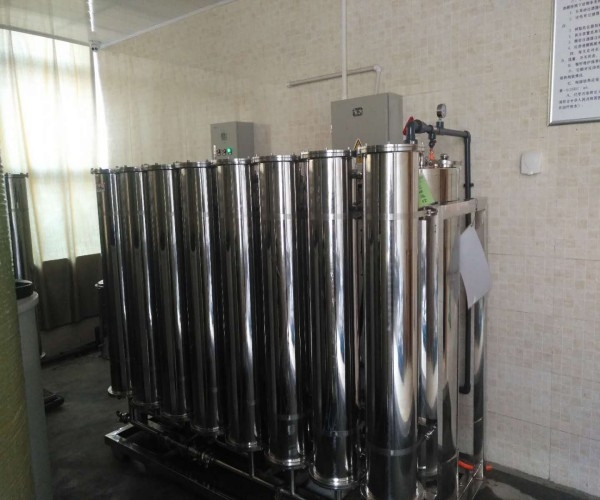
We finished the whole replacement process smoothly in one go: shut down the system, remove old membranes, install new ones, conduct commissioning, pass acceptance and get payment!
Unexpectedly, about half a month later, the client contacted us and reported excessive bacteria in RO permeate water, making the system unusable normally.
At that moment, I could simply tell the client: Even though RO membranes can filter most bacteria, a tiny amount of bacteria may pass through and multiply, causing bacteria levels out of control. This problem has nothing to do with the quality of the reverse osmosis membranes themselves!
However, hospital water equipment cannot be explained away with just two simple sentences. We had to find the root cause of the problem for the client. I could not bear to see patients affected by this issue.
First of all, we need to make one point clear: Reverse osmosis only intercepts bacteria; it cannot kill them.
Secondly, no single water treatment process can completely eliminate bacteria forever. We can only adopt a combined solution including pretreatment disinfection, RO interception, regular chemical sanitization and terminal UV sterilizer. This set of solutions can keep bacteria counts stably within the safe and reasonable range required by the client. But continuous maintenance is still necessary. If we stop all bacteria control measures, bacteria will grow again quickly.
In the end, we sent our engineers to the site and performed a full chemical sanitization for the whole system. After that, the bacteria problem never appeared again.
Alright! If you want to learn more topics about reverse osmosis membrane filtration, feel free to leave a message in the comment section. See you next time!