 xbymc
xbymcGenerally speaking, reverse osmosis membranes can remove fluoride.
In China’s tap water standard, the fluoride limit is 1.0 mg/L. Drinking water with excessive fluoride over the long term is harmful to human health.
However, we need specific data for accurate analysis, because the situation varies.
The rated salt rejection rate of a reverse osmosis membrane mainly refers to its removal rate of sodium chloride. As shown in Dow’s technical manuals, separate removal rates are listed for different substances.
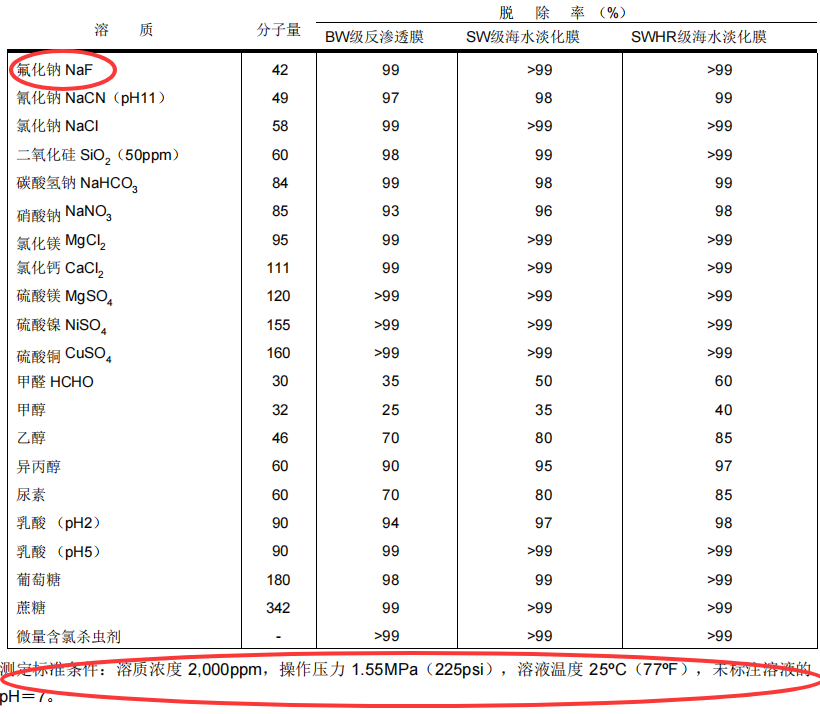
From these data tables, we can see two key points:
1. The removal rate for some substances is only about 25%. For substances not listed, lab tests are needed to check the actual removal effect.
2. The removal rate of sodium fluoride can reach 99%.
That means if the fluoride in local water is mainly sodium fluoride, reverse osmosis membranes work very well.
But fluoride is a broad category, including magnesium fluoride, potassium fluoride, sodium fluorosilicate, aluminum fluoride, hydrofluoric acid, organic fluorides, calcium fluoride and more.
There are many different fluoride compounds. It is best to run small lab tests to confirm the real fluoride removal rate.
If reverse osmosis cannot reduce fluoride effectively enough, other methods such as special resin filters should be used.
That’s all about fluoride removal by reverse osmosis membranes today.
If you have more questions about reverse osmosis membranes, feel free to visit XBYMC to discuss them!