 xbymc
xbymcHey guys, today we’re going to walk through a seawater desalination project case from 2024, located in a northern Chinese city.
Main Process
FlowSeawater → Flocculation Tank → Lamella Clarifier → V-Type Filter → Self-Cleaning Filter → Ultrafiltration (UF) → First-Stage Seawater Reverse Osmosis (SWRO) → Second-Stage Reverse Osmosis (RO) → Cation Exchanger → Anion Exchanger → Mixed Bed → Demineralized Water Tan
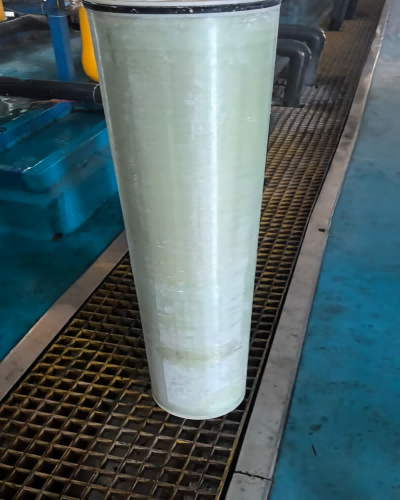
The system adopts 7-element pressure vessels, with a single-stage arrangement consisting of 58 pressure vessels and a total of 406 RO membrane elements. After roughly 8 months of operation, the system failed to deliver the original design permeate flow rate and permeate conductivity.
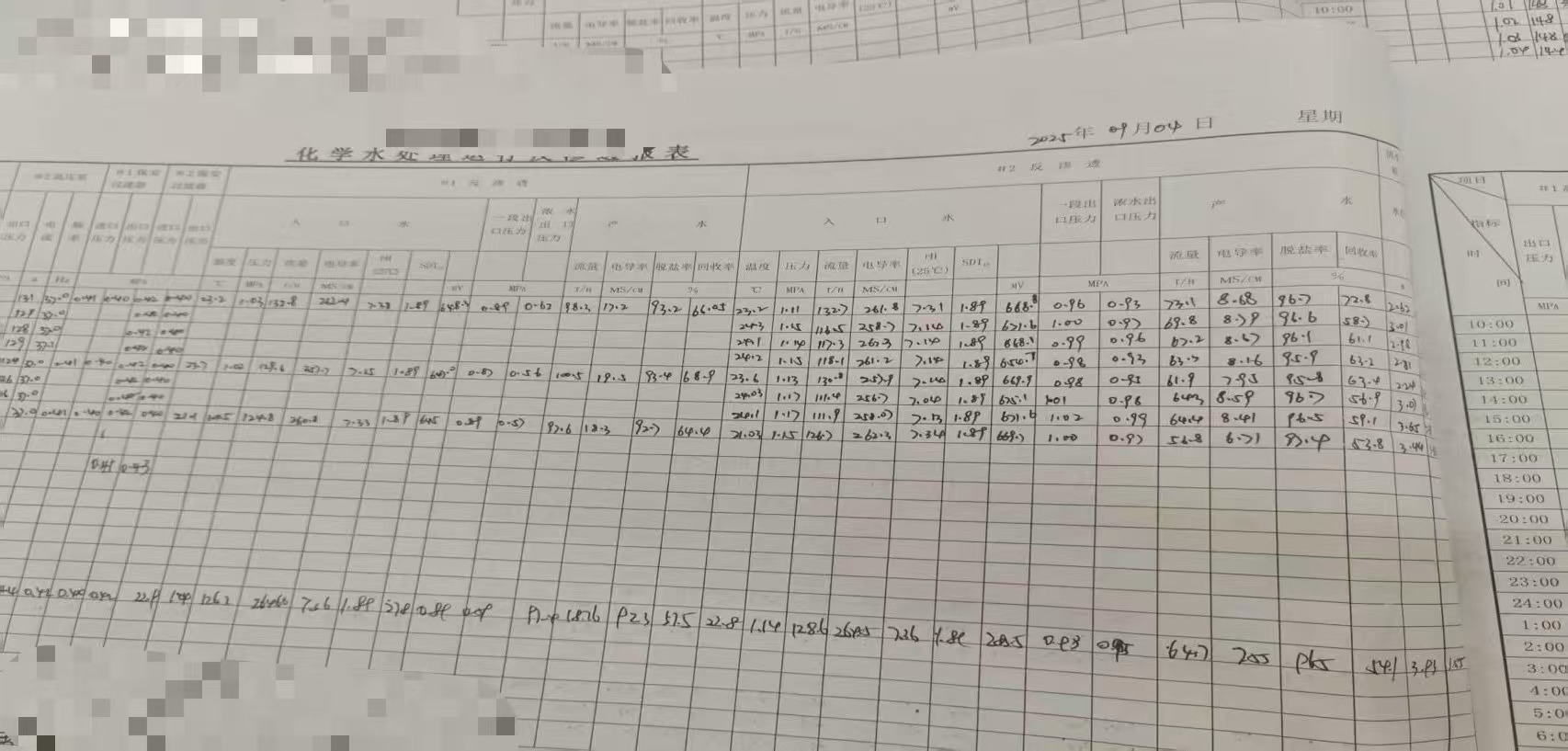
Our technical team was dispatched to the site to work alongside the client and identify the root cause.As usual, let’s start by analyzing the on-site operating data:
| Condition | Permeate Flow (m³/h) | Concentrate Flow (m³/h) | Feed Conductivity (μS/cm) | Permeate Conductivity (μS/cm) | Feed Pressure (MPa) | Concentrate Pressure (MPa) | Recovery Rate (%) | Salt Rejection Rate (%) | Water Temperature (℃) |
| Pre-Cleaning | 120 | 180 | 46000 | 570 | 3.8 | 3.55 | 40 | 98.76 | 21 |
| Post-Cleaning | 120 | 180 | 48000 | 580 | 3.6 | 3.53 | 40 | 98.73 | 21 |
As shown in the data, the salt rejection performance remained acceptable overall.
Subsequently, we increased the frequency of the high-pressure pump, raising the feed pressure to 4.42 MPa. The permeate quality improved noticeably, with permeate conductivity dropping to 421.1 μS/cm and the system salt rejection rate rising to 99.04%.
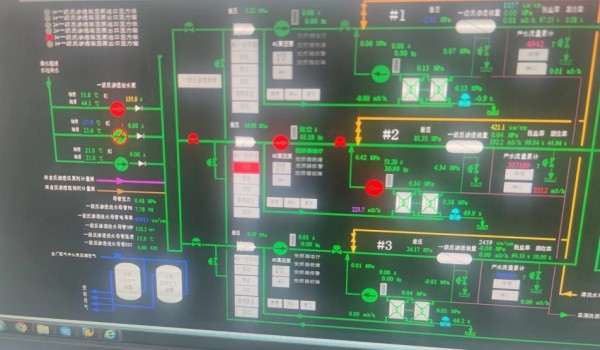
To further pinpoint the source of the malfunction, we selected the No.6 pressure vessel (installed at a lower elevation) for a membrane probe test. The test results are listed below:
| Element No. | 1 | 2 | 3 | 4 | 5 | 6 | 7 |
|---|---|---|---|---|---|---|---|
| Permeate Conductivity (μS/cm) | 264 | 276 | 288 | 302 | 316 | 332 | 345 |
| Element No. | 8 | 9 | 10 | 11 | 12 | 13 | 14 |
|---|---|---|---|---|---|---|---|
| Permeate Conductivity (μS/cm) | 351 | 368 | 394 | 405 | 421 | 443 | 460 |
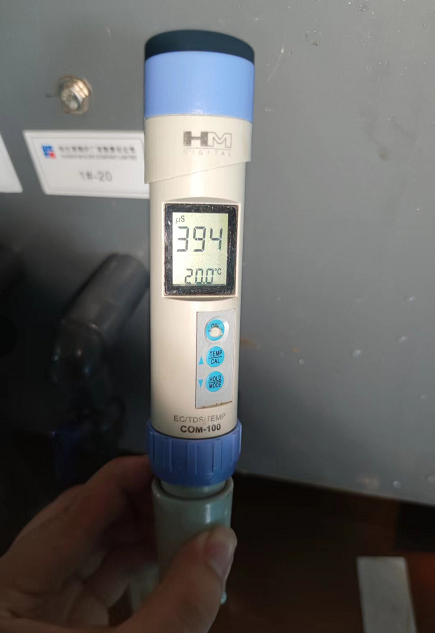
The probe test revealed that the permeate conductivity of each membrane element inside the pressure vessel changed steadily in a linear ascending trend, with no sharp conductivity spikes indicating severely damaged individual membranes.
After reviewing all recorded on-site data and conducting comprehensive troubleshooting, we confirmed the root cause of the underperformance stemmed from improper daily operational parameters.
Moving forward, maintaining the high-pressure pump frequency to sustain a feed pressure above 4.3 MPa will restore both the required permeate output and qualified permeate conductivity to fully meet the site’s production demands.
Alright, that‘s it for today’s topic on dropping salt rejection.At XBYMC, we’re all about building a community where water treatment professionals from around the world can share ideas and troubleshoot together. Drop a comment below—we’d love to hear from you! Catch you next time for another episode of “Why Did You Change?”.